



The 2026 World Cup has already produced one of those moments where a technical rule becomes a football story. Not because FIFA has suddenly introduced a dramatic new law saying that a team is automatically eliminated after losing its first two group matches. It has not. That is the first point that has to be made clearly.
The real change is more precise, and more important. FIFA's 2026 World Cup regulations now place head-to-head results before overall goal difference when teams in the same group finish level on points. In plain English, if two or more teams end the group stage with the same number of points, FIFA first looks at what happened in the matches between those teams, rather than immediately comparing their total goal difference across the whole group.
Key takeaways
- FIFA has notcreated an automatic "lose twice and you are out" rule.
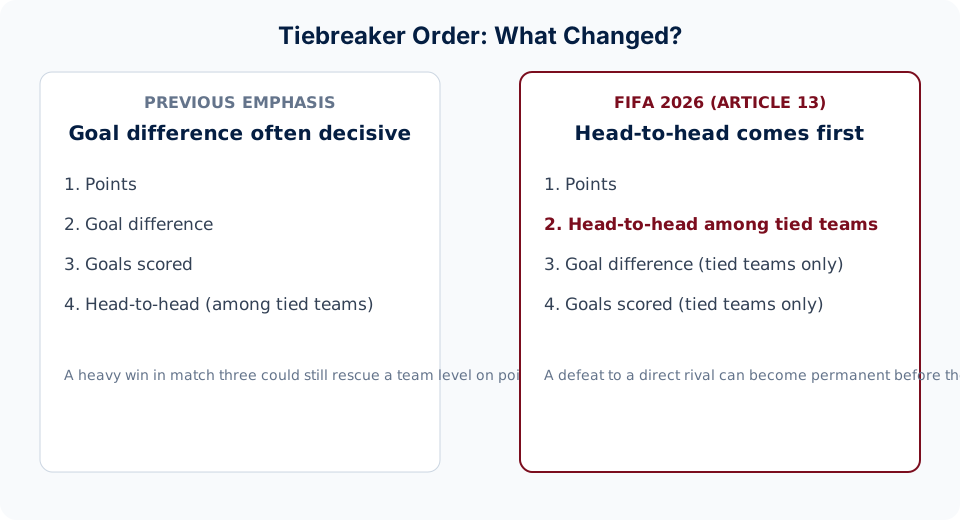
- Article 13 changes the tiebreaker order when teams are level on points: head-to-head now comes before overall goal difference.
- Some teams can be mathematically eliminated early if direct results close every realistic route in the table.
- With eight third-placed teams advancing, survival paths still exist - but not always inside the same head-to-head duel.
What FIFA Actually Changed
That sounds like a small administrative adjustment. It is not. It changes the way a group table behaves. It changes how quickly a team can be confirmed as group winner. It changes how soon another team can be declared out. And it changes the psychology of the final round of group matches.
Track live tables and fixtures on our World Cup 2026 hub, groups centre, and live scores as the tournament progresses.
What changed?
When teams finish level on points, FIFA now compares head-to-head results first, then goal difference among the tied teams - not the old habit of leaning on overall group goal difference as the first rescue route.
Why Headlines Oversimplify the Story
The misunderstanding comes from the way the story is often reduced into a headline. "Team out after losing first two games because of FIFA rule change" is partly true in effect, but not completely accurate in law. The rule does not say: lose twice and you are gone. Some teams may still survive two defeats if the group mathematics and the third-place ranking allow it. Others may be eliminated before their final match because the head-to-head outcomes have already closed every realistic legal route through the table.
The rule does not punish two defeats automatically. It punishes two defeats in a specific table situation.
Two losses, two different outcomes
That is the key distinction. Under older World Cup group-stage logic, supporters were used to goal difference keeping teams alive. A side could lose twice, win heavily in the final match, and hope another result created a three-way tie. Goal difference could then act almost like a second chance. That gave weaker starters a reason to believe that one big performance could still rescue their tournament.

How the Tiebreaker Order Works Now
In 2026, that rescue route is narrower. If a team loses to direct rivals, then later finishes level with them on points, those earlier direct defeats matter before overall goal difference. From a regulatory point of view, the logic is clean: the table should first reward the team that performed better against the team it is tied with. From a football point of view, the effect is more controversial: it can reduce the last-day drama in some groups because the decisive result has already happened.


Head-to-Head vs Goal Difference - The Football Debate
The rule is published in advance. It applies equally to all teams. It is not retrospective. It does not give FIFA discretion to pick one team over another after the event. In that sense, it is a legitimate competition rule. Every federation, coach and player entered the tournament under the same ranking system.
But legal clarity is not the same as sporting satisfaction. Football's emotional appeal often comes from the illusion that everything remains possible until the final whistle. Goal difference helped preserve that feeling. Head-to-head strips some of it away. It says: your direct meeting mattered most. If you lost it, you cannot later erase it by beating someone else heavily.
Head-to-head says your direct meeting mattered most. If you lost it, you cannot later erase it by beating someone else heavily.
There is a strong football argument in favour of that. Head-to-head rewards direct sporting superiority. If Team A and Team B finish level on points, and Team A beat Team B, many people would say Team A has earned the right to be ranked above them. That is simple, intuitive and difficult to challenge.
There is also an argument against it. Group football is not only about one match. It is about performance across three games. A team that loses narrowly to a rival but then produces better overall results against the rest of the group may feel that goal difference is a better measure of consistency. Goal difference also encourages attacking football until the end. If head-to-head has already settled the relevant tie, the final match can lose part of its competitive edge.
Why the 48-Team Format Complicates Everything
The 2026 format complicates the issue further because eight of the twelve third-placed teams qualify for the Round of 32. That means finishing third is not automatically fatal. In theory, the expanded tournament should keep more teams alive for longer. In practice, the head-to-head rule can work in the opposite direction inside individual groups. A team may still be only three points behind a rival, but if the direct result makes it impossible to overtake that rival, its group position may already be sealed.
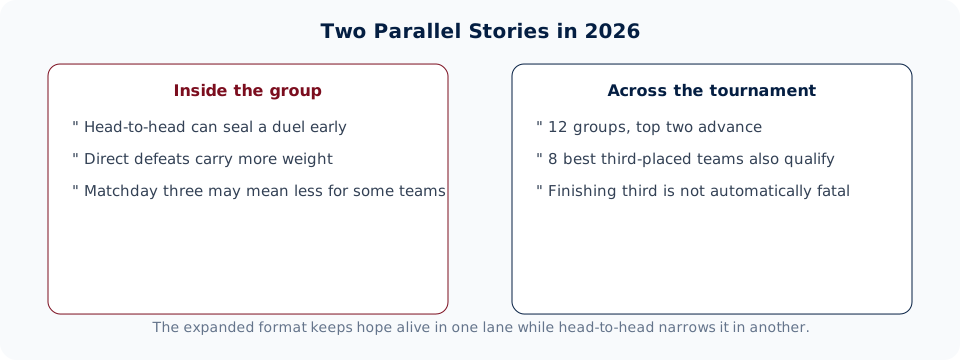
This is why some teams can be out after two games while others with the same number of defeats may still have a path. It depends on the structure of the group, the points spread, the direct results, and the third-place ranking table. The rule is not "two losses equals elimination". The accurate interpretation is: two losses can now lead to earlier mathematical elimination if the head-to-head results prevent the team from winning the necessary tiebreakers.
For a wider look at how the enlarged tournament works, see our World Cup 2026 complete fan guide and group stage explainer.
What This Means for Coaches, Fans and Journalists
For journalists and websites covering the tournament, this matters. A simplified headline may attract attention, but the explanation underneath must be exact. Calling it an automatic two-defeat elimination rule is wrong. FIFA has changed the ranking criteria for teams level on points - not added a blunt new knockout mechanism to the group stage.
For coaches, matchday one and matchday two carry even more legal weight in the table than before. A defeat against a direct rival is no longer just three points lost and a dent in goal difference. It can become a permanent disadvantage that cannot be repaired later unless the points table breaks favourably.
For supporters, the rule will feel brutal when it works against their team. A fan may look at the table and say: "We can still finish on the same points, so why are we out?" Once points are level, FIFA asks who performed better in the direct meetings. If the answer is already clear, goal difference may never get a chance to rescue the team.
The Verdict: Legally Sound, Footballistically Debatable
The rule is precise. It is knowable. It rewards direct results. But it also risks flattening part of the World Cup's traditional last-day chaos. One of the great pleasures of the group stage has always been the strange mathematics of simultaneous matches: one goal in one stadium changing everything in another. Head-to-head does not remove that drama completely, especially with third-place qualification still in play, but it does reduce it in certain scenarios.
Article 13 may look like a dry regulation. On the pitch, it decides who still has hope, who is already safe, and who is playing a final group match that no longer means what it once did.
The fairest conclusion is this: FIFA has not created a rule that automatically eliminates teams after two defeats. What FIFA has done is adopt a tiebreaking order that makes early elimination more likely in some groups, because direct results now come before overall goal difference. That is a technical change with very real football consequences.
Quick comparison
What headlines often say: FIFA now eliminates teams automatically after two defeats.
What the regulations say: when teams are level on points, head-to-head results are ranked before overall goal difference - which can produce earlier mathematical elimination in some groups.